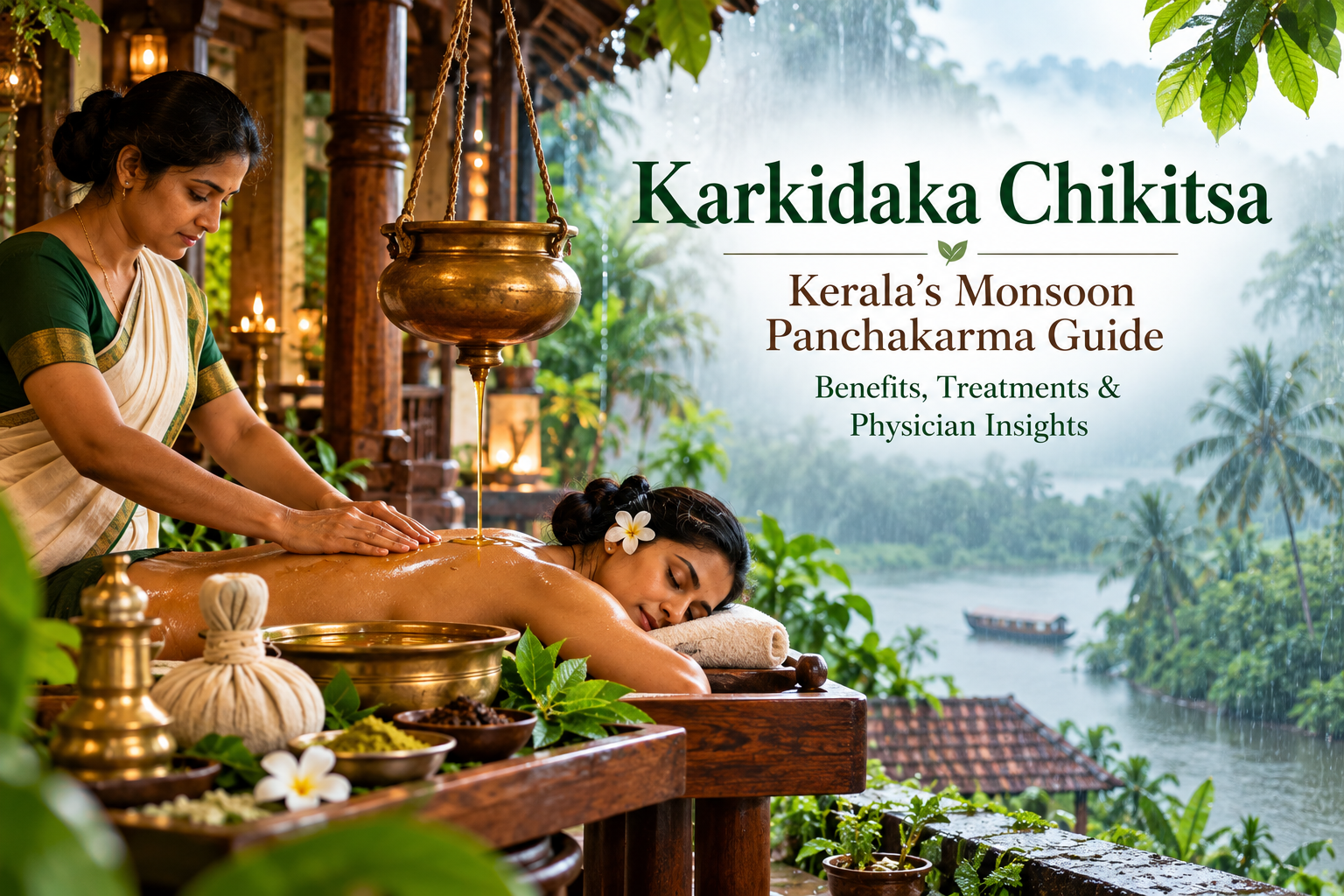

What is Karkidaka Chikitsa? Karkidaka Chikitsa is a physician-guided seasonal healthcare program in Ayurveda that is traditionally practiced during Karkidakam, the last month of the Malayalam calendar (approximately mid-July to mid-August), which coincides with the peak of Kerala’s southwest monsoon. Classical Ayurvedic texts describe this period as a time when the body’s Agni (digestive and metabolic fire) becomes weak, Vata Dosha (the principle governing movement and the nervous system) becomes aggravated, and Ojas (the body’s vital essence associated with strength, immunity, and resilience) is depleted. Rather than viewing this season solely as a time of increased illness, Ayurveda recognizes it as a unique therapeutic window during which the body becomes more receptive to cleansing, nourishment, and rejuvenation. Karkidaka Chikitsa therefore combines dietary regulation, herbal medicines, Panchakarma therapies, lifestyle modifications, yoga, and rejuvenative treatments to restore physiological balance and prepare the body for the coming year. The scientific rationale behind Karkidaka Chikitsa is increasingly appreciated alongside its classical Ayurvedic foundation. During the monsoon, changes in humidity, atmospheric pressure, temperature, and sunlight can influence digestion, immunity, circulation, and overall physiological function. Ayurveda describes this as a period of reduced digestive capacity leading to the accumulation of Ama (metabolic waste or improperly processed substances), which may contribute to disease if left unaddressed. Classical physicians also observed that the body’s Srotas (microchannels responsible for transport and communication within the body) become more receptive during this season. Modern understanding of skin hydration, transdermal absorption, lymphatic circulation, and neuroendocrine responses provides plausible biological explanations for why externally applied medicated oils and physician-supervised therapies may be particularly effective during the monsoon. A comprehensive Karkidaka Chikitsa program follows a carefully structured sequence rather than offering a single treatment. It often begins with Deepana (enhancing digestive fire) and Pachana (digesting accumulated Ama), followed by Snehapana (internal oleation with medicated ghee), Abhyanga (therapeutic oil massage), and Swedana (medicated sweating therapies). Depending on the individual’s health status, constitution (Prakriti), disease condition, and physician’s assessment, appropriate Panchakarma procedures—such as Virechana (therapeutic purgation), Vasti (medicated enema), or Nasya (nasal therapy)—may be recommended. The final phase focuses on Rasayana (rejuvenation), using nourishing herbal formulations, seasonal dietary measures such as Karkidaka Kanji (medicated herbal rice gruel), and lifestyle practices to rebuild strength, support immune function, and promote long-term wellbeing. It is important to note that not every individual requires all Panchakarma procedures; treatment is always selected according to clinical need. Today, Karkidaka Chikitsa is valued not only as a traditional seasonal practice but also as a preventive and restorative healthcare strategy. Healthy individuals often undergo annual treatment to maintain vitality, while patients with chronic musculoskeletal disorders, inflammatory joint diseases, psoriasis, digestive disorders, stress-related conditions, respiratory allergies, and lifestyle-related illnesses may benefit from physician-supervised Panchakarma as part of a broader management plan. From a modern medical perspective, these therapies should be viewed as complementary rather than substitutes for essential conventional treatment when indicated. The greatest strength of Karkidaka Chikitsa lies in its holistic approach—addressing digestion, metabolism, immunity, physical function, mental wellbeing, and healthy lifestyle habits through evidence-informed, individualized Ayurvedic care delivered under the guidance of qualified physicians.