
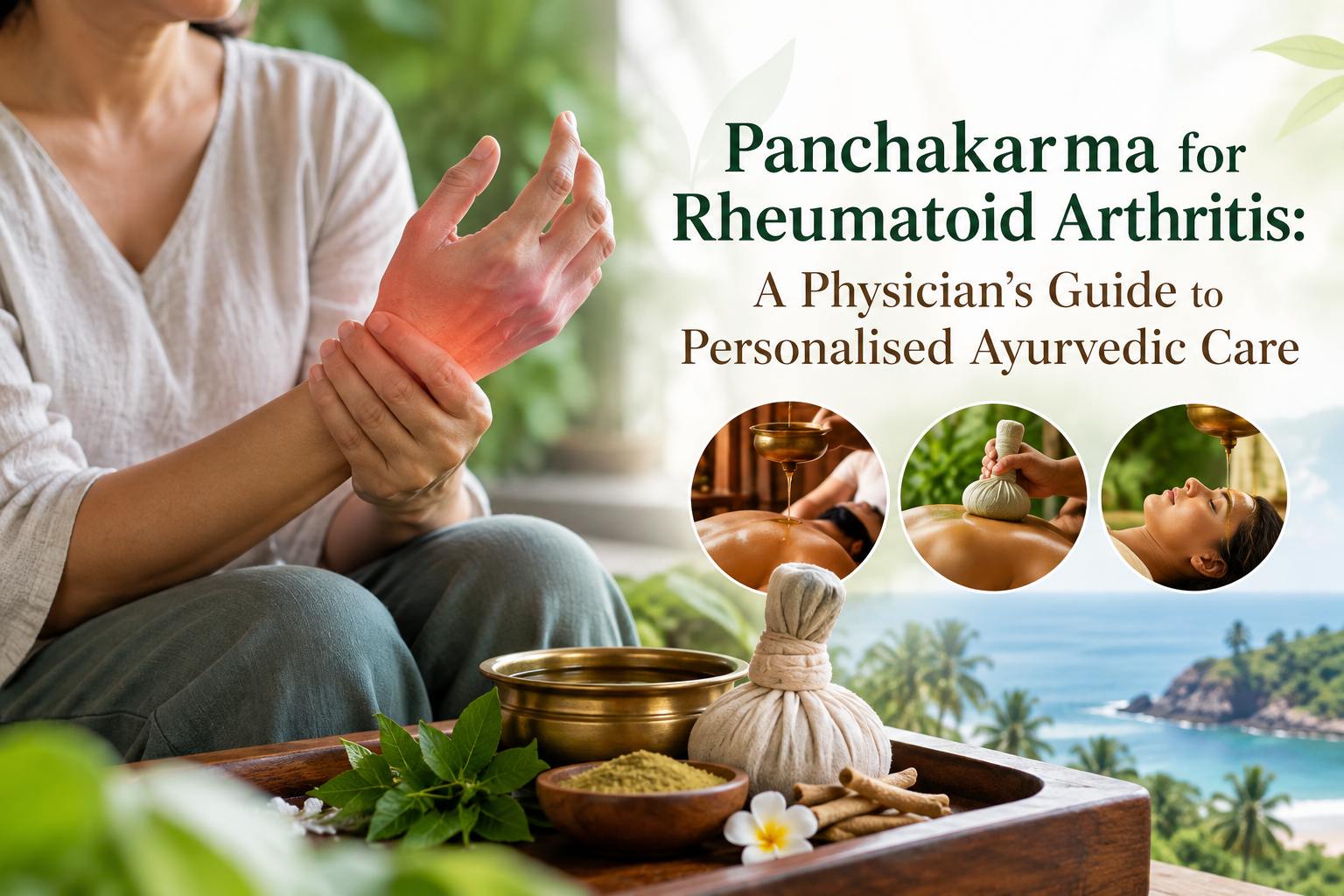
One of the most important lessons I learned during my postgraduation and doctoral research on Rheumatoid Arthritis (Amavata) is that no two patients with Rheumatoid Arthritis are the same. While they may share the same diagnosis, they often differ considerably in disease activity, digestive capacity (Agni), the presence of Ama (improperly processed metabolic substances), constitutional type (Prakriti), age, strength (Bala), associated illnesses, and response to previous treatments. Yet, in clinical practice, it is common to see patients receiving similar Panchakarma protocols. This observation reinforced a fundamental Ayurvedic principle: treatment should be individualized according to the patient, not merely the disease.
Ayurveda describes Rheumatoid Arthritis under the broad spectrum of Amavata, a condition that evolves through different stages rather than remaining static. In the early inflammatory phase, when Ama predominates, the therapeutic priority is often Langhana (Lightening Therapy), Deepana (Enhancing Digestive Capacity), Pachana (Digesting Ama), and Rukshana (Drying Therapies) before considering purification. As the disease progresses and Vata Dosha becomes more prominent, therapies such as Basti (Medicated Enema Therapy), Virechana (Therapeutic Purgation) in selected patients, nourishing measures, rehabilitation, and Rasayana (Rejuvenation Therapy) may become more appropriate. The timing, sequence, and combination of these therapies should always be guided by careful physician assessment rather than a predetermined treatment package.
This philosophy became the foundation of my published work proposing a Personalized Panchakarma Treatment Algorithm for Amavata (Rheumatoid Arthritis). Rather than recommending a single protocol for every patient, the algorithm emphasizes clinical decision-making based on Dosha predominance, disease stage (Vyadhi Avastha), disease severity (Roga Bala), patient strength (Rogi Bala), digestive status, and individual constitution. This approach reflects the timeless Ayurvedic principle of “Purusham Purusham Veekshya”—every patient should be examined and treated as a unique individual. In many ways, what modern medicine now describes as personalized or precision medicine has always been an integral part of classical Ayurveda.
In my experience, the true strength of Panchakarma lies not in performing the same procedures for every patient, but in selecting the right therapy, in the right sequence, for the right patient, at the right time. Authentic Panchakarma is therefore never a standardized package or a one-size-fits-all protocol. It is a carefully individualized therapeutic strategy that integrates classical Ayurvedic wisdom with meticulous clinical assessment, aiming to improve function, reduce disease burden, and enhance quality of life while respecting the unique needs of every individual living with Rheumatoid Arthritis.
