
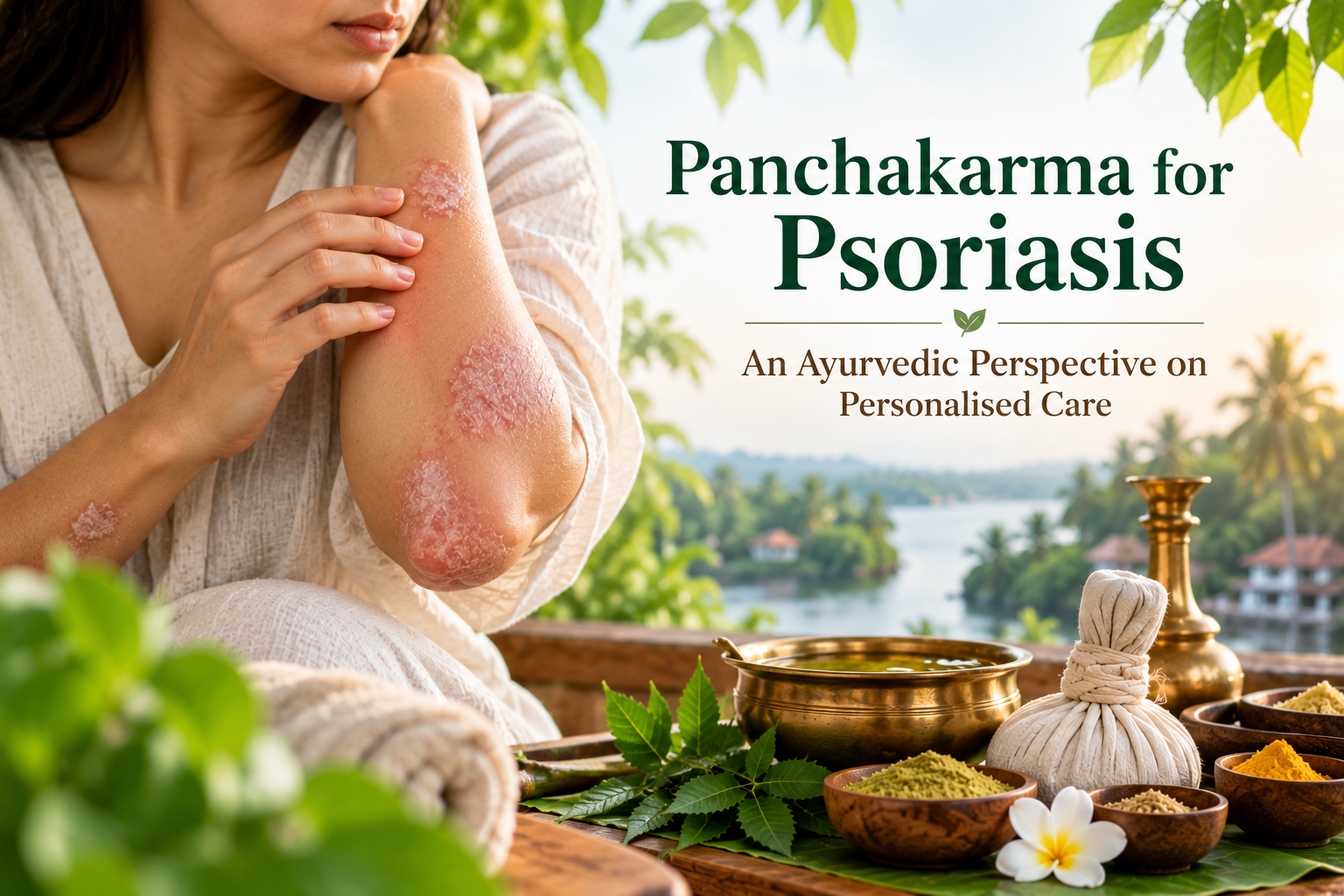
Psoriasis is one of the most common chronic inflammatory skin diseases, affecting millions of people worldwide. Although it primarily manifests as red, scaly, itchy plaques on the skin, psoriasis is now recognized as a systemic immune-mediated disorder that may also involve the joints, nails, cardiovascular system, and psychological well-being. Many individuals experience cycles of remission and relapse, with symptoms often triggered by stress, infections, certain medications, climate, or lifestyle factors. While conventional dermatology offers effective therapies—including topical medications, phototherapy, systemic immunomodulators, and biologic agents—psoriasis remains a lifelong condition for many patients, prompting interest in complementary approaches that focus on long-term health and quality of life.
Ayurveda approaches psoriasis from a broader perspective, viewing the skin as a reflection of internal physiological balance rather than an isolated organ. Instead of focusing solely on visible lesions, Ayurvedic management seeks to understand the underlying imbalance contributing to recurrent skin inflammation. Depending on the clinical presentation, psoriasis is commonly correlated with Kushtha (Chronic Skin Disorders) described in the classical texts. The pathology often involves the vitiation of Vata, Pitta, and Kapha Doshas, together with disturbances in Rakta (Blood Tissue) and impaired Agni (Digestive and Metabolic Capacity). Consequently, treatment extends beyond topical applications and includes dietary regulation, lifestyle modification, physician-selected herbal medicines, and Panchakarma (Bio-purification Therapy) when clinically indicated.
Understanding Psoriasis in Ayurveda
Classical Ayurvedic texts describe Kushtha (Chronic Skin Disorders) as a broad group of diseases resulting from the simultaneous vitiation of the Tridoshas (Vata, Pitta, and Kapha), along with the involvement of Rakta (Blood Tissue) and other Dhatus (Body Tissues). These disorders are not viewed as conditions affecting only the skin; rather, they reflect deeper systemic imbalances involving digestion, metabolism, nutrition, and body channels (Srotas). From this perspective, psoriasis is commonly understood under the broader spectrum of Kushtha, as its chronic, recurrent nature and multisystem involvement closely resemble the classical Ayurvedic understanding of chronic skin diseases.
Ayurveda explains that several factors may contribute to the development and recurrence of Kushtha, including impaired digestive and metabolic function (Agnimandya), accumulation of Ama (Improperly Processed Metabolic Substances), incompatible dietary habits (Viruddha Ahara), unhealthy lifestyle practices (Mithya Ahara-Vihara), psychological stress, and disturbance of the Tridoshas. Over time, these factors may affect the skin and deeper tissues, leading to persistent inflammation, dryness, scaling, itching, discoloration, and recurrent episodes. Therefore, Ayurvedic management extends beyond the visible skin lesions and focuses on correcting the underlying internal imbalance while promoting long-term skin health and systemic well-being.
Why Panchakarma Plays an Important Role
Among the many therapeutic approaches described in Ayurveda, Panchakarma (Bio-purification Therapy) occupies a special place in the management of chronic skin disorders because it aims to eliminate aggravated Doshas rather than merely pacifying them. Classical Ayurvedic texts particularly emphasize Shodhana Chikitsa (Purification Therapy) in selected patients with chronic Kushtha, as purification is believed to help restore the balance of Pitta, Kapha, and Rakta, which are frequently involved in inflammatory skin diseases.
Depending on the physician’s assessment, treatment may begin with Deepana (Enhancing Digestive Capacity) and Pachana (Digesting Ama) to optimize metabolism before purification. Preparatory therapies such as Snehana (Oleation Therapy) and Swedana (Sudation Therapy) are then performed to mobilize aggravated Doshas toward the gastrointestinal tract. Among the principal Panchakarma procedures, Virechana (Therapeutic Purgation) is regarded as one of the most important therapies for disorders involving aggravated Pitta Dosha and Rakta, making it particularly relevant in many inflammatory skin conditions. In carefully selected patients, Vamana (Therapeutic Emesis) may also be indicated where Kapha Dosha predominates. These therapies are always followed by Samsarjana Krama (Graduated Dietary Rehabilitation) and individualized herbal medicines to support recovery and maintain therapeutic benefits.
Panchakarma Is More Than a Skin Treatment
One of the most common misconceptions is that Panchakarma simply “cleanses the blood” or treats the skin directly. In reality, authentic Panchakarma is a physician-guided therapeutic process designed to restore systemic balance. Alongside purification procedures, treatment includes:
- Individualized Ayurvedic herbal medicines
- Therapeutic diet based on classical principles
- Lifestyle modification
- Stress management
- Yoga and breathing practices where appropriate
- Long-term follow-up to reduce recurrence
Because psoriasis is often influenced by multiple factors—including immune regulation, stress, sleep, digestion, and metabolic health—Ayurveda addresses each of these components as part of an integrated treatment plan rather than focusing solely on the skin lesions.
