
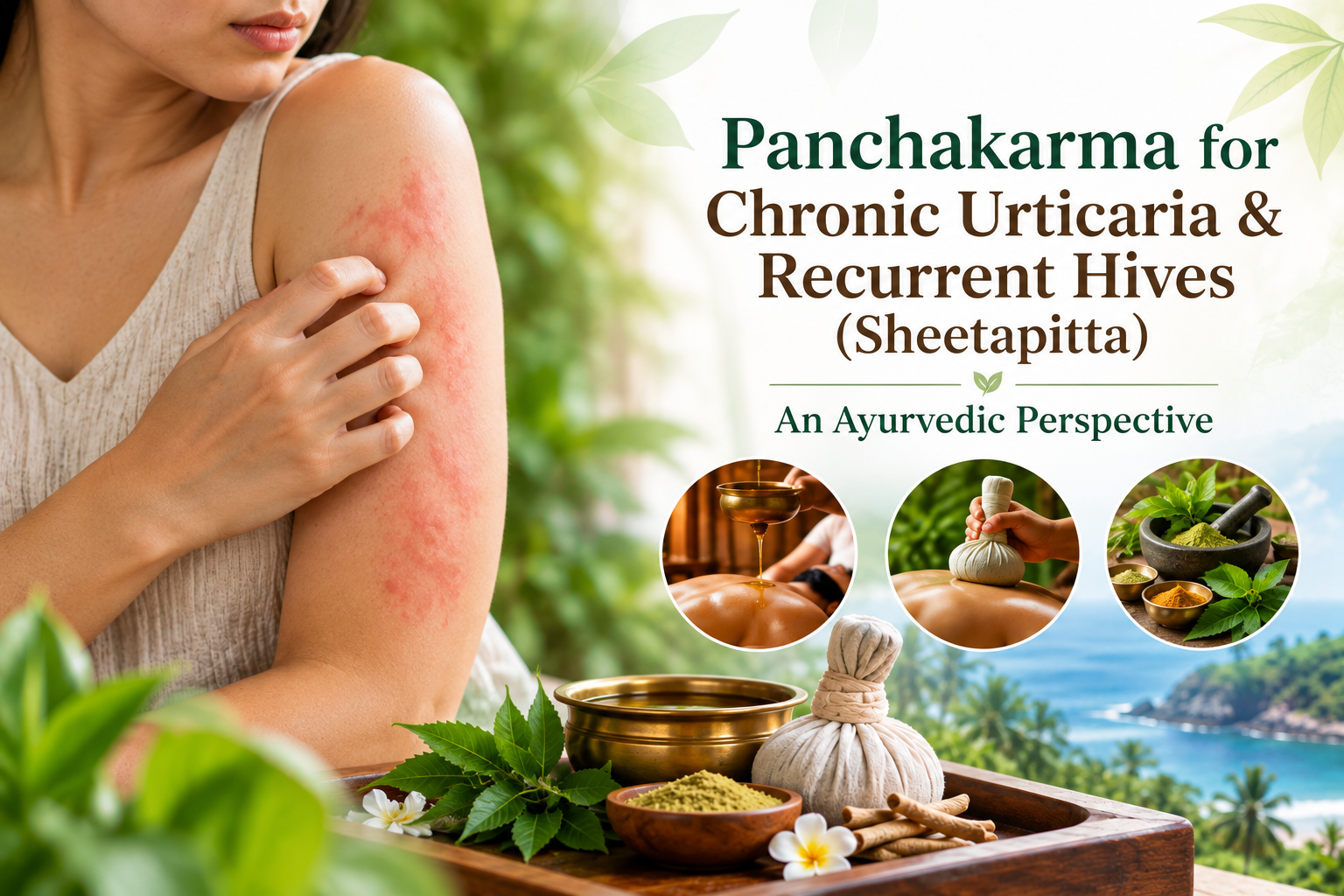
Chronic Urticaria, commonly known as hives, is a recurring inflammatory skin disorder characterized by intensely itchy, raised red wheals that appear suddenly, vary in size, and usually disappear within 24 hours without leaving permanent marks. In some individuals, these episodes are accompanied by deeper swelling known as angioedema, affecting areas such as the lips, eyelids, or face. When these symptoms persist or recur for more than six weeks without an identifiable external trigger, the condition is classified as Chronic Spontaneous Urticaria (CSU). Although antihistamines, corticosteroids, biologic agents, and other conventional therapies play an important role in symptom control, many patients continue to experience recurrent flare-ups that disrupt sleep, work, emotional well-being, and overall quality of life. As a result, an increasing number of people are seeking integrative approaches that aim not only to relieve symptoms but also to improve long-term health and reduce recurrence.
In Ayurveda, Chronic Urticaria closely resembles Sheetapitta, a disorder described in the classical texts as arising when exposure to cold (Sheeta) aggravates Vata and Kapha Doshas, which subsequently combine with Pitta Dosha and spread throughout the body, producing recurrent itchy wheals, erythematous skin eruptions, and swelling. This pathological process may be further influenced by impaired digestive and metabolic function (Agnimandya) and the accumulation of Ama (Improperly Processed Metabolic Substances), which are believed to contribute to the persistence and recurrence of symptoms. Consequently, Ayurvedic management extends beyond relieving the visible skin manifestations and focuses on restoring internal physiological balance through appropriate dietary regulation, lifestyle modification, physician-selected herbal medicines, and Panchakarma (Bio-purification Therapy) when clinically indicated. Classical Ayurvedic texts regard Shodhana Chikitsa (Bio-purification Therapy) and Shamana Chikitsa (Pacifying Therapy) as complementary approaches, with purification therapies playing an important role in carefully selected patients where elimination of aggravated Doshas is indicated.
Among the Panchakarma procedures, Vamana (Therapeutic Emesis) and Virechana (Therapeutic Purgation) are traditionally considered the principal purification therapies for Sheetapitta, depending on the stage of the disease and the patient’s clinical presentation. Vamana helps eliminate aggravated Kapha Dosha, while Virechana is regarded as the primary therapy for disorders involving aggravated Pitta Dosha, including many inflammatory skin conditions described in Ayurveda. These procedures are never performed in isolation or as part of a standard “detox package.” They are preceded by Purva Karma (Preparatory Measures) such as Deepana (Enhancing Digestive Capacity), Pachana (Digesting Ama), Snehana (Oleation Therapy), and Swedana (Sudation Therapy), followed by Paschat Karma (Post-Therapy Care) including Samsarjana Krama (Graduated Dietary Rehabilitation). This carefully sequenced approach aims to prepare the body for purification, facilitate the elimination of aggravated Doshas through their natural routes, restore digestive function, and support long-term recovery.
Published clinical evidence suggests that physician-guided Panchakarma, when integrated with individualized Ayurvedic medicines, dietary modification, and lifestyle guidance, improves symptom severity, reduce recurrence, and enhance quality of life in selected patients with Chronic Urticaria. These observations are consistent with the classical Ayurvedic understanding that recurrent inflammatory skin disorders benefit from a comprehensive therapeutic strategy rather than symptomatic treatment alone. For patients seeking a holistic, physician-led approach to Chronic Urticaria, authentic Panchakarma offers more than temporary relief—it provides a personalized model of care that addresses digestive health, systemic balance, and skin wellness together. Ayurveda emphasizes careful clinical evaluation and individualized treatment, making Panchakarma a thoughtful and evidence-informed component of integrative care for Sheetapitta (Chronic Urticaria).
