
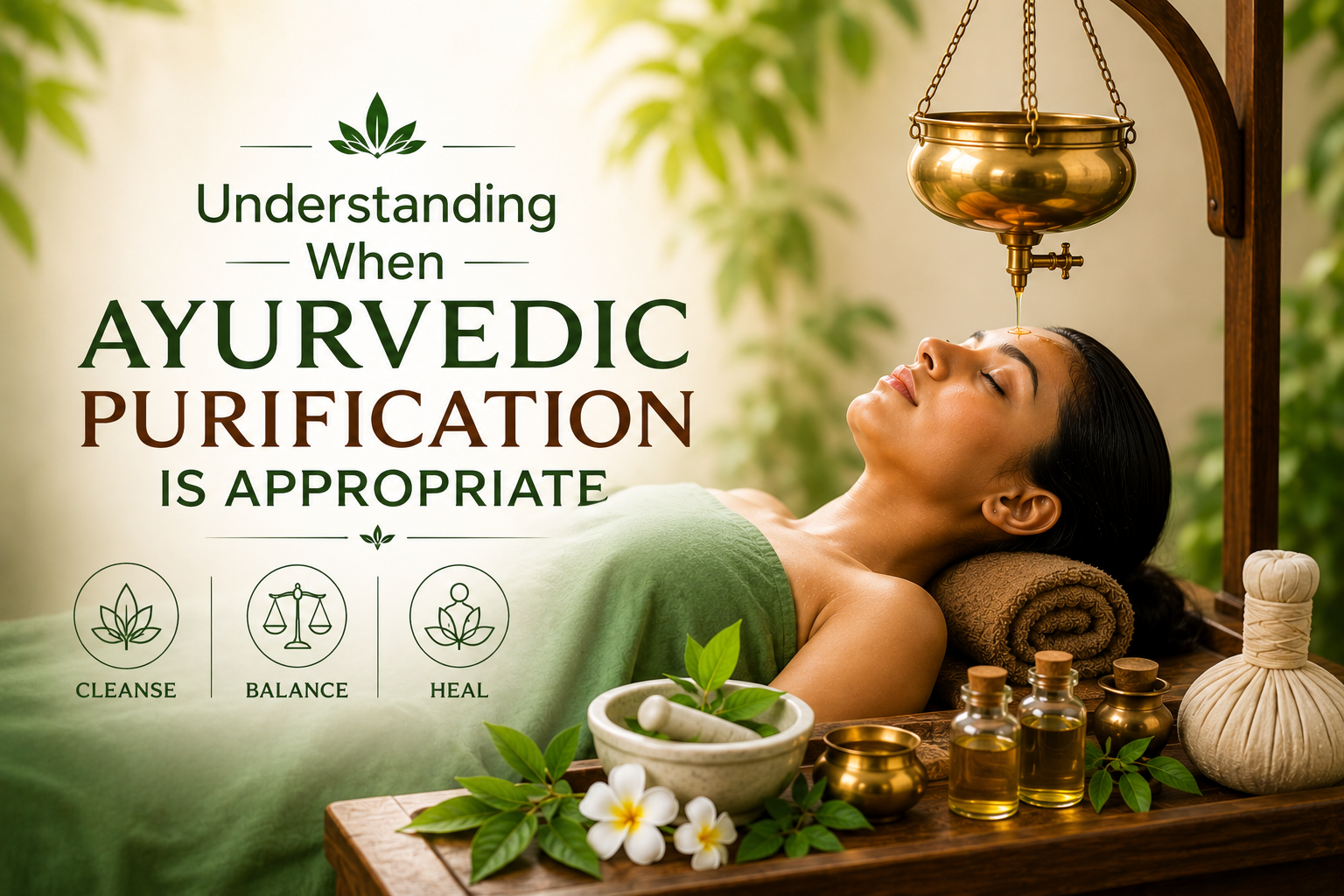
Understanding When Ayurvedic Purification Is Appropriate
“Authentic Panchakarma is not a treatment for everyone. It is a physician-guided therapy prescribed only when the individual, the disease, and the timing are appropriate.”
One of the most common questions patients ask is:
“Do I need Panchakarma?”
The answer is not always yes.
Unlike many commercial wellness programmes that recommend the same detox package for every guest, classical Ayurveda emphasizes that Panchakarma should only be performed after careful clinical evaluation. The decision depends not only on the disease but also on the individual’s constitution, strength, age, digestive capacity, season, and overall health.
In fact, one of the defining features of authentic Panchakarma is knowing when not to perform it.
Panchakarma Is a Personalized Medical Therapy
Ayurveda has always recognized that two people with the same diagnosis may require completely different treatments.
For example, two individuals with osteoarthritis may have similar knee pain, yet one may benefit from Basti (Medicated Enema Therapy), while another may first require digestive correction, nutritional support, or Shamana Chikitsa (Pacifying Therapy) before purification is considered.
This individualized approach is based on a detailed assessment of:
- Prakriti (Natural Constitution)
- Vikriti (Current Imbalance)
- Agni (Digestive and Metabolic Capacity)
- Presence of Ama (Improperly Processed Metabolic Substances)
- Strength of the patient (Bala)
- Age
- Season (Kala)
- Stage and chronicity of disease
- Associated medical conditions
- Current medications
- Physical and mental resilience
Only after evaluating these factors does an Ayurvedic physician decide whether Panchakarma is appropriate.
When Does Ayurveda Recommend Panchakarma?
Classical Ayurvedic texts indicate purification when the Doshas (Vata, Pitta, and Kapha) are significantly aggravated and cannot be adequately managed through diet, lifestyle modification, or herbal medicines alone.
The goal is not to treat every illness with purification but to restore balance when purification is clinically indicated.
Panchakarma may be considered in carefully selected individuals for:
- Chronic musculoskeletal disorders
- Certain inflammatory conditions
- Digestive and metabolic disorders
- Some skin diseases
- Selected neurological disorders
- Stress-related functional disorders
- Seasonal health maintenance in suitable individuals
- Preparation for Rasayana (Rejuvenation Therapy)
The exact treatment plan varies according to each patient’s needs.
Who May Benefit from Panchakarma?
Panchakarma is not prescribed based solely on the name of a disease. In Ayurveda, treatment is individualized according to the patient’s Prakriti (Natural Constitution), Vikriti (Current Imbalance), Dosha involvement, Agni (Digestive and Metabolic Capacity), strength, age, season, and stage of disease.
When purification is clinically indicated, Panchakarma may be incorporated into a comprehensive Ayurvedic treatment plan for a wide range of acute and chronic health conditions.
Musculoskeletal and Rheumatological Disorders
Panchakarma is widely utilized in Ayurveda for selected patients with disorders affecting the joints, muscles, bones, and connective tissues, particularly when Vata Dosha predominates.
Conditions may include:
- Osteoarthritis
- Rheumatoid arthritis
- Ankylosing spondylitis
- Cervical spondylosis
- Lumbar spondylosis
- Frozen shoulder
- Sciatica
- Tennis elbow
- Plantar fasciitis
- Chronic neck pain
- Chronic low back pain
- Degenerative joint disorders
- Muscle stiffness
- Fibromyalgia (selected patients)
- Sports-related musculoskeletal rehabilitation
Depending on the clinical presentation, therapies such as Basti (Medicated Enema Therapy), Abhyanga (Therapeutic Oil Massage), Pizhichil (Therapeutic Oil Bath), Shashtika Shali Pinda Sweda (Medicated Rice Bolus Fomentation), and Patra Pinda Sweda (Herbal Leaf Bolus Therapy) may be incorporated into the treatment programme.
Neurological Disorders and Rehabilitation
Ayurveda has a long tradition of using Panchakarma as part of comprehensive neurological rehabilitation.
Selected patients may benefit in conditions such as:
- Facial paralysis (Bell’s palsy)
- Hemiplegia and post-stroke rehabilitation
- Paraplegia
- Peripheral neuropathy
- Cervical radiculopathy
- Lumbar radiculopathy
- Trigeminal neuralgia
- Guillain–Barré syndrome rehabilitation (selected patients)
- Migraine
- Chronic tension-type headache
Treatment is individualized and often combines Panchakarma with physiotherapy, yoga, rehabilitation exercises, and internal Ayurvedic medicines.
Digestive and Gastrointestinal Disorders
Because Ayurveda places great emphasis on digestive health, Panchakarma may be recommended for carefully selected patients with chronic gastrointestinal disorders after thorough evaluation.
Examples include:
- Functional dyspepsia
- Indigestion
- Irritable bowel syndrome (IBS)
- Functional constipation
- Chronic bloating
- Hyperacidity
- Gastroesophageal reflux symptoms
- Fatty liver (selected patients)
- Loss of appetite associated with impaired Agni
The objective is to improve digestive capacity, restore metabolic balance, and correct the underlying Dosha imbalance.
Metabolic and Lifestyle Disorders
Lifestyle-related diseases are becoming increasingly common worldwide.
Selected Panchakarma therapies may be considered for patients with:
- Obesity
- Metabolic syndrome
- Prediabetes
- Type 2 diabetes (adjunctive Ayurvedic care)
- Dyslipidaemia
- Sedentary lifestyle-related disorders
- Chronic fatigue
Management is always combined with individualized dietary advice, exercise, yoga, sleep optimization, and lifestyle modification.
Skin Disorders
Classical Ayurvedic texts describe purification therapy as an important component in the management of several chronic skin disorders where Dosha aggravation is significant.
Examples include:
- Psoriasis
- Eczema
- Atopic dermatitis
- Acne vulgaris
- Vitiligo (selected patients)
- Chronic urticaria
- Lichen planus
- Recurrent allergic skin conditions
Treatment generally combines Panchakarma with dietary regulation, herbal medicines, and long-term lifestyle management.
Women’s Health
Individualized Panchakarma may be recommended for selected women with:
- Polycystic ovary syndrome (PCOS)
- Menstrual irregularities
- Dysmenorrhoea
- Perimenopausal symptoms
- Menopausal health
- Infertility as part of preconception care
- Recurrent leucorrhoea
- Chronic pelvic discomfort (selected cases)
Treatment is always individualized and coordinated with the patient’s reproductive goals and overall health.
Respiratory and Allergic Disorders
Selected purification procedures are traditionally indicated for disorders involving aggravated Kapha Dosha.
These may include:
- Chronic allergic rhinitis
- Recurrent sinusitis
- Chronic sinus congestion
- Certain chronic respiratory disorders
- Seasonal allergies
Procedures such as Nasya (Nasal Administration of Medicines) may be recommended where appropriate.
Stress, Sleep and Mental Well-being
Although Panchakarma is not a substitute for psychological or psychiatric care, individualized Ayurvedic therapies may support patients experiencing:
- Chronic stress
- Occupational burnout
- Anxiety associated with lifestyle factors
- Sleep disturbances
- Mental fatigue
- Emotional exhaustion
These programmes often integrate yoga, meditation, breathing practices, counselling, and restorative Ayurvedic therapies.
Healthy Ageing and Preventive Healthcare
Panchakarma is not performed only after disease develops.
Ayurveda also recommends physician-guided purification in carefully selected healthy individuals to help maintain physiological balance, particularly as part of Ritucharya (Seasonal Regimen) and before Rasayana Chikitsa (Rejuvenation Therapy).
Many individuals seek Panchakarma for:
- Preventive healthcare
- Healthy ageing
- Improved vitality
- Seasonal wellness
- Executive stress management
- Recovery from prolonged physical or mental exhaustion
Who Should Postpone Panchakarma?
Just as important as knowing who may benefit is understanding when Panchakarma should be delayed or modified.
Depending on the individual’s condition, purification may not be appropriate during:
- Acute severe illness
- Marked physical weakness
- Certain stages of pregnancy
- Immediately after major surgery
- Severe dehydration
- Significant nutritional deficiency
- Poor digestive capacity requiring correction first
- When the patient’s strength is insufficient to tolerate purification
Classical Ayurveda repeatedly emphasizes that patient selection is essential for both safety and effectiveness.
Why Physician Assessment Matters
Before recommending treatment, an Ayurvedic physician evaluates:
✔ Constitution
✔ Current imbalance
✔ Medical history
✔ Previous treatments
✔ Digestive function
✔ Sleep
✔ Diet
✔ Lifestyle
✔ Laboratory reports, when appropriate
✔ Treatment goals
Only then is a personalized treatment plan developed.
This individualized approach has been central to Ayurvedic practice for centuries and remains one of its greatest strengths.
Physician’s Perspective
One of the principles I explain to every patient is that Panchakarma is prescribed based on the person—not merely the diagnosis. Two individuals with the same medical condition may receive entirely different treatment plans because their constitution, digestive capacity, strength, and stage of disease differ. In some cases, purification is appropriate; in others, the safest and most effective approach may be Shamana Chikitsa (Pacifying Therapy), nutritional support, or lifestyle modification. This individualized decision-making lies at the heart of authentic Ayurvedic practice and is one of the reasons Panchakarma should always be physician-guided.
