
Understanding Shodhana Chikitsa (Purification Therapy) in Classical Ayurveda
This is one of the most important sections because it answers “Why would anyone undergo Panchakarma?” Rather than simply listing the procedures, it explains the philosophy behind them. It also naturally introduces concepts like Dosha, Agni, Ama, Srotas, and Shamana vs Shodhana, which you will reference throughout the rest of your website.
For thousands of years, Ayurveda has viewed health as much more than the absence of disease. True health, according to the classical texts, exists when the body’s physiological functions remain in harmony, digestion and metabolism function efficiently, tissues are well nourished, wastes are eliminated properly, and the mind and senses remain balanced.
Disease develops when this natural equilibrium is disturbed.
According to Ayurveda, this imbalance occurs primarily through the aggravation of the Doshas (Vata, Pitta, and Kapha)—the three fundamental functional principles that govern all biological processes. When these Doshas become disturbed and cannot return to their normal state naturally, they begin to disrupt digestion, metabolism, tissue function, and the body’s internal channels of circulation (Srotas). Over time, this may contribute to the development of disease.
Panchakarma was developed as Ayurveda’s principal method of restoring this lost balance. Rather than simply reducing symptoms, it seeks to remove excessively aggravated Doshas after careful preparation, allowing the body’s natural regulatory mechanisms to function optimally once again.
This philosophy makes Panchakarma fundamentally different from many conventional approaches that primarily aim to suppress symptoms. Instead, Ayurveda asks a different question:
“Why has this imbalance developed, and how can the body be restored to its natural state?”
The Two Fundamental Approaches to Ayurvedic Treatment
Classical Ayurveda broadly divides treatment into two major categories.
- Shamana Chikitsa (Pacifying Therapy)
Shamana Chikitsa aims to reduce or pacify aggravated Doshas without eliminating them from the body. This is achieved through individualized combinations of:
- Therapeutic diet
- Lifestyle modification
- Herbal medicines
- Deepana (Improving Digestive Capacity)
- Pachana (Digesting Ama or Improperly Processed Metabolic Substances)
- Exercise
- Sleep regulation
- Stress management
For many acute illnesses and mild imbalances, this approach is entirely appropriate and often highly effective.
However, Ayurveda recognizes that there are situations where pacification alone may not be sufficient.
- Shodhana Chikitsa (Purification Therapy)
The second approach is Shodhana Chikitsa, or purification therapy.
Panchakarma forms the cornerstone of this branch of Ayurvedic medicine.
Rather than merely controlling aggravated Doshas, Shodhana aims to eliminate them from the body after they have been carefully mobilized through preparatory therapies.
This distinction is beautifully explained in the Charaka Samhita, one of Ayurveda’s foundational texts.
दोषाः कदाचित् कुप्यन्ति जितालङ्घनपाचनैः ।
जिताः संशोधनैर्ये तु न तेषां पुनरुद्भवः ॥
“Doshas subdued through fasting and digestive therapies may become aggravated again, whereas those eliminated through purification are far less likely to recur.”
— Charaka Samhita, Sutra Sthana 16/20
This verse highlights an important therapeutic principle rather than an absolute rule. It does not suggest that every patient requires purification. Instead, it emphasizes that when Doshas are excessively aggravated and appropriate indications exist, properly performed purification may provide a more comprehensive restoration of physiological balance than symptom management alone.
Why Doesn’t Ayurveda Purify Everyone?
One of the greatest misconceptions about Panchakarma is that it is beneficial for everyone at any time.
The classical Ayurvedic texts clearly disagree.
Panchakarma is recommended only after careful assessment of several factors, including:
- Prakriti (Natural Constitution)
- Vikriti (Current Imbalance)
- Strength of the patient
- Digestive capacity (Agni)
- Age
- Season (Kala)
- Disease stage
- Associated medical conditions
Only when purification is appropriate should Panchakarma be performed.
This individualized approach is one of Ayurveda’s greatest strengths and reflects its emphasis on personalized medicine rather than standardized treatment protocols.
The Principle of “Preparing Before Purifying”
One of the defining characteristics of authentic Panchakarma is that purification is never performed immediately.
Before any of the five principal procedures are considered, the body undergoes a carefully planned preparatory phase known as Purva Karma (Preparatory Measures).
These therapies include:
- Deepana (Enhancing Digestive Capacity)
- Pachana (Digesting Ama or Improperly Processed Metabolic Substances)
- Snehana (Oleation Therapy)
- Swedana (Sudation or Therapeutic Sweating)
The objective is to loosen and mobilize aggravated Doshas from peripheral tissues and guide them toward the gastrointestinal tract, where they can be eliminated through the most appropriate natural route.
Without this preparation, classical Ayurveda considers purification incomplete and potentially inappropriate.
A Fundamental Principle Explained by Chakrapani Acharya
The renowned commentator Chakrapani explains that Panchakarma eliminates aggravated Doshas through the nearest natural route of elimination after they have been properly prepared and mobilized.
This principle distinguishes authentic Panchakarma from generalized cleansing practices.
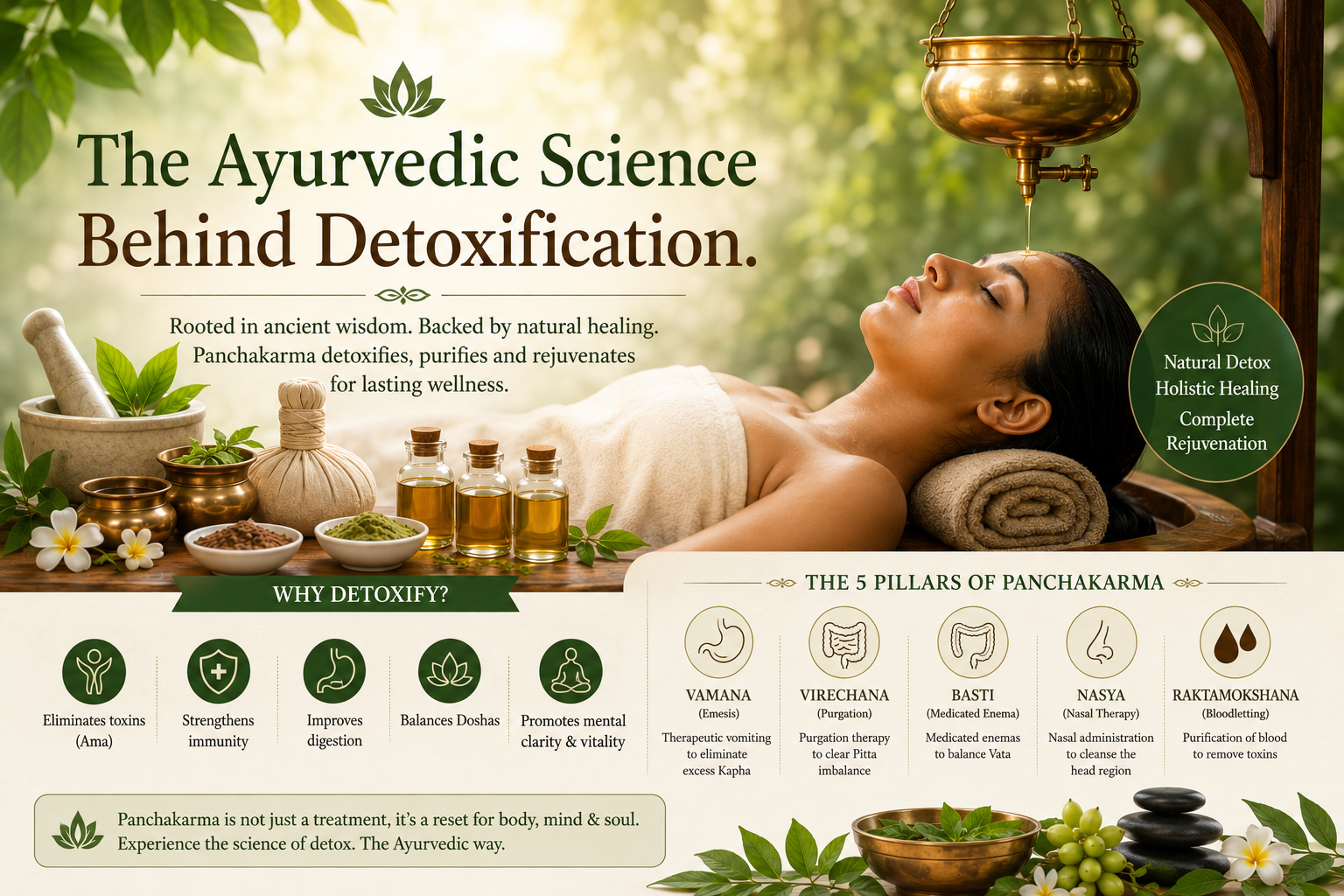
It also explains why procedures such as therapeutic vomiting (Vamana) or purgation (Virechana) are never performed simply to “cleanse the body.” They are carefully selected medical interventions based on the location of the aggravated Doshas and the patient’s overall clinical condition.
Panchakarma Is More Than a Detox
Today, Panchakarma is often described as an “Ayurvedic detox.”
Although this term is widely used, it is an oversimplification.
In Ayurveda, the objective extends beyond cleansing.
Panchakarma seeks to:
- Restore the balance of Doshas (Functional Biological Regulators)
- Improve Agni (Digestive and Metabolic Capacity)
- Remove obstruction from Srotas (Body Channels)
- Support healthy tissue function
- Prepare the body for Rasayana (Rejuvenation Therapy)
- Promote long-term health and resilience
These goals reflect a broader understanding of health than detoxification alone.
A Physician’s Perspective
One of the most common questions I receive from international patients is whether Panchakarma is necessary for everyone seeking Ayurvedic treatment.
The answer is no.
Many patients respond very well to carefully selected herbal medicines, dietary modification, and lifestyle correction without requiring purification therapies. Others benefit from one specific Panchakarma procedure rather than all five.
Authentic Ayurveda is not defined by performing more treatments. It is defined by selecting the right treatment for the right patient at the right time. This principle of individualized care has guided Ayurvedic physicians for centuries and remains the foundation of safe, effective Panchakarma practice today.
